
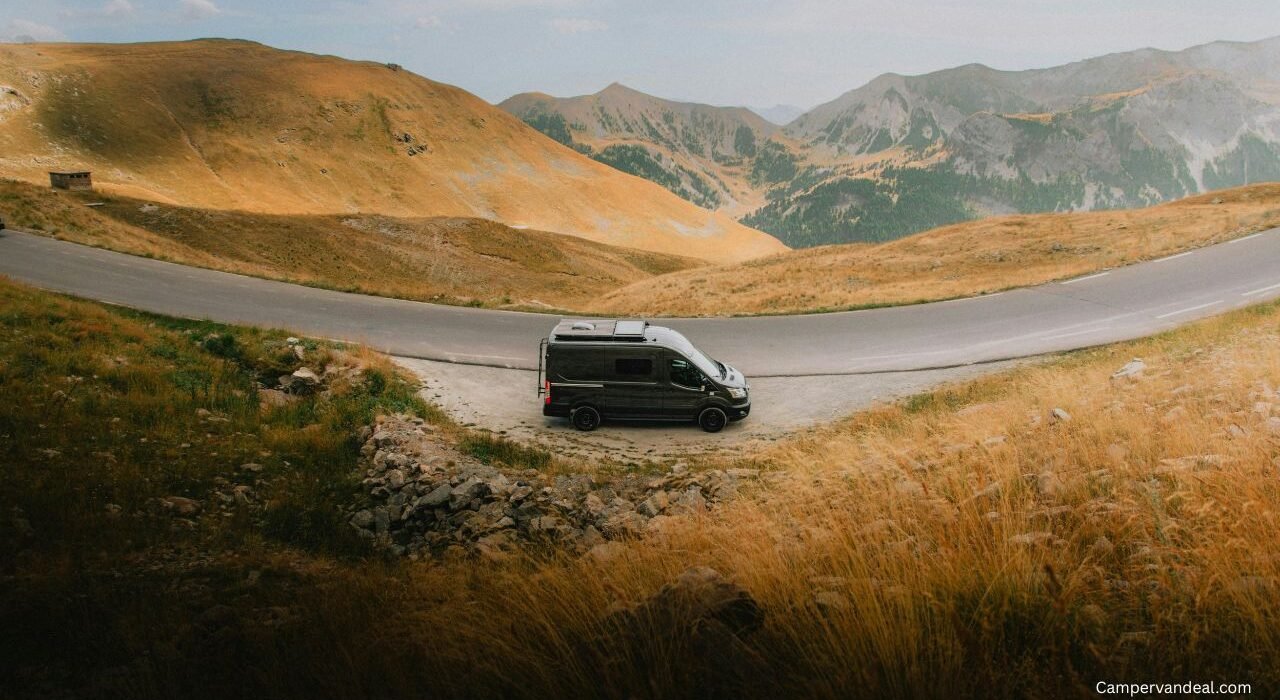
Campervans and motorhomes both get you off the beaten path, but they suit different kinds of trips.
Campervans are smaller, easier to park and generally cheaper to hire — ideal for couples or solo travellers who want flexibility on winding coastal roads. Motorhomes offer more space, onboard bathrooms and often a proper kitchen, making them better suited to families or longer trips where comfort matters more than manoeuvrability.

Consider your route too: narrow outback tracks and tight coastal car parks favour a smaller van, while long highway stretches make the extra space of a motorhome worth the trade-off in agility.
Below, we break down the differences in more detail so you can match the right vehicle to your trip.
What’s the actual difference?
The terms get used loosely, but there’s a real distinction:
- Campervans are converted vans — think Toyota HiAce, VW Transporter, or similar — with a bed, some storage, and usually a basic kitchen setup built into the existing van body. They drive much like a regular van or large car.
- Motorhomes are purpose-built on a truck or van chassis, with a separate living compartment (often with a raised roof or slide-out section) that includes a fixed bed, bathroom, kitchen, and seating area. They’re taller, wider, and longer, and they drive more like a small truck.
Size and parking
This is usually the deciding factor for a lot of travellers.
- Campervans fit into standard car parks, handle tight coastal roads and hairpin turns without drama, and are far less stressful to reverse or manoeuvre in busy towns.
- Motorhomes need more room to turn, often can’t fit into standard parking bays, and may be restricted from certain ferry lanes, tunnels, or narrow rural roads. On the plus side, dedicated caravan and motorhome parks are built with this size in mind.
If your trip involves a lot of stop-start driving through small towns — a Great Ocean Road style itinerary, for example — a campervan will save you a lot of hassle.

Comfort and facilities
- Campervans typically have a compact kitchenette (small stove, sink, fridge) and a bed that often needs to be set up each night from seats or a fold-out platform. Bathrooms are usually external — you’ll be using campsite facilities or a portable toilet.
- Motorhomes usually include a fixed double or queen bed, a full kitchen with more bench space, a proper table and seating, and an onboard bathroom with shower and toilet. Some larger models sleep 4–6 people comfortably.
If having your own toilet and shower matters — especially for families with young kids or trips with long stretches between towns — a motorhome earns its extra size.
Cost
Campervans are generally cheaper to hire, use less fuel, and cost less to insure than motorhomes. Motorhomes come with a higher rental price, heavier fuel use, and sometimes additional costs for larger campsite sites or dump-point fees. For budget-conscious trips or shorter getaways, a campervan usually works out better value.
Driving experience
Campervans drive close to a normal car or van, which means less anxiety for first-time renters, easier city driving, and more confidence on winding or unsealed roads. Motorhomes take more getting used to — wider mirror checks, more careful judgement of height (bridges, low branches, service station canopies), and slower, more deliberate driving overall.
Which one suits your trip?
| Trip style | Better fit |
|---|---|
| Couple or solo traveller, coastal road trip | Campervan |
| Family of 4+, longer touring holiday | Motorhome |
| Short weekend getaway | Campervan |
| Multi-week trip with remote stretches | Motorhome |
| Budget-focused travel | Campervan |
| Comfort-focused travel, all facilities onboard | Motorhome |
| Narrow roads, tight parking, ferries | Campervan |
| Long highway touring, established campgrounds | Motorhome |
A few practical tips before you book
- Check your route first. If it includes narrow mountain passes, tight coastal towns, or ferry crossings with vehicle size limits, confirm the motorhome you’re considering will actually fit.
- Think about set-up time. Campervans with fold-out beds take a few extra minutes each night and morning — worth factoring in if you’re arriving late or leaving early.
- Compare fuel costs, not just rental price. A motorhome’s larger engine and extra weight can add noticeably to your fuel bill over a multi-week trip.
- Ask about facilities included. Not all campervans have a toilet or shower, and not all motorhomes have a full kitchen — check the specific model, not just the category.

The bottom line
There’s no universally “better” option — it comes down to how many people are travelling, how long you’re going for, and what kind of roads you’ll be driving. A campervan rewards flexibility and easy driving; a motorhome rewards comfort and self-sufficiency. Once you know your route and who’s coming along, the right choice usually becomes obvious.
Last updated: August 16, 2026
ph –>
Last updated: August 16, 2026
Last updated: August 18, 2026