A nine-day Tasmania campervan circuit is enough time to connect several of the island’s best-known national parks without turning every day into a long relocation. This route starts and finishes in Hobart, travels west through Mount Field and Lake St Clair, continues north to Cradle Mountain, then crosses to the east coast for the Bay of Fires and Freycinet before returning through the Tasman Peninsula.
The full loop is approximately 1,250 km. Driving times below are estimates for normal conditions and do not include fuel, food, photo or walking stops. Tasmania’s roads are often narrow and winding, so campervan days usually take longer than the distance suggests.
Trip overview
Duration: 9 days / 8 nights
Start and finish: Hobart
Approximate distance: 1,250 km
Longest driving day: Coles Bay to the Tasman Peninsula, about 235 km
Best time: November to April for longer daylight and generally milder conditions
Campervan difficulty: Moderate — sealed roads, but frequent bends, hills and changing weather
Route at a glance
Hobart → Mount Field → Lake St Clair → Cradle Mountain → Launceston → Bay of Fires → Freycinet → Tasman Peninsula → Hobart
The route includes two low-driving days at Cradle Mountain and Freycinet. Those slower days provide flexibility for weather and make the itinerary more enjoyable than changing campsites every night.
Collect the campervan in Hobart, complete a full vehicle handover and buy groceries before leaving the city. Drive northwest to Mount Field National Park. The short walk to Russell Falls is a practical first stop because it is close to the visitor centre and does not require a full hiking day.
Continue through the Derwent Valley toward Lake St Clair. The road becomes quieter and more winding after Hamilton, so allow daylight for the final section. Stay at Lake St Clair or nearby Derwent Bridge. Do not plan a major hike today; pickup, shopping and familiarising yourself with the vehicle will use more time than expected.
Day 2: Lake St Clair to Cradle Mountain
Approximate driving: 170 km / 2 hours 45 minutes.
Take a short morning walk beside Lake St Clair before driving north through the Central Highlands. Stop at The Wall in the Wilderness if it interests you, and refuel when the opportunity arises. Services are limited between the larger towns.
Arrive at Cradle Mountain by mid-afternoon, check into a campground or holiday park and visit the national park visitor centre. The shuttle-bus system is normally the easiest way to reach Dove Lake during operating hours. Keep food sealed and never feed wildlife around the campground.
Day 3: Cradle Mountain
Approximate driving: Local transfers only.
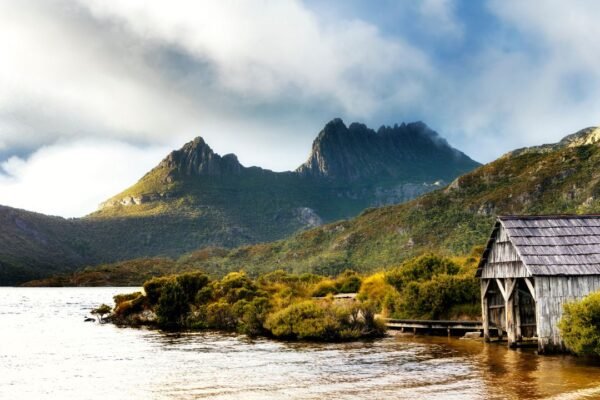
Use the full day for Cradle Mountain-Lake St Clair National Park. The Dove Lake Circuit is about 6 km and commonly takes two to three hours, while shorter options include the Enchanted Walk and sections around Ronny Creek. Choose a walk that matches the weather and your experience.
Mountain conditions can change rapidly, even in summer. Carry warm and waterproof layers, water and food, and turn around if conditions deteriorate. A second night near Cradle Mountain avoids packing up immediately after a walk and provides a useful weather buffer.
Day 4: Cradle Mountain to Launceston via Sheffield
Approximate driving: 150 km / 2 hours 30 minutes.
Leave Cradle Mountain after breakfast and drive toward Sheffield, known for its outdoor murals. Continue to Launceston for fuel, groceries, laundry and any campervan servicing you need. If time allows, walk through Cataract Gorge, which is close to the city and makes an easy afternoon activity.
Stay in or near Launceston. This practical overnight breaks the cross-island drive and makes the next day to the northeast coast comfortable.
Day 5: Launceston to the Bay of Fires
Approximate driving: 165 km / 2 hours 30 minutes.
Drive northeast through Scottsdale and continue toward St Helens. Stock up in St Helens before heading to the Bay of Fires, as choices become limited farther north. Spend the afternoon exploring beaches and the orange-lichen-covered granite around Binalong Bay or The Gardens.
Use a designated campground or holiday park. Free and low-cost sites may be popular, have limited facilities and operate under local restrictions, so confirm the current rules before relying on them. Carry sufficient drinking water and leave no waste.
Day 6: Bay of Fires to Freycinet
Approximate driving: 125 km / 2 hours.
Enjoy a relaxed morning on the coast, then travel south through St Helens, Scamander and Bicheno to Coles Bay. This section is scenic but includes bends and small towns, so it is worth allowing time for stops rather than treating it as a quick transfer.
Arrive at Freycinet National Park with enough daylight to settle into the campground. Campsites inside the park are in high demand and may use seasonal booking or ballot arrangements. Book ahead or secure a commercial alternative around Coles Bay.
Day 7: Freycinet National Park
Approximate driving: Local transfers only.
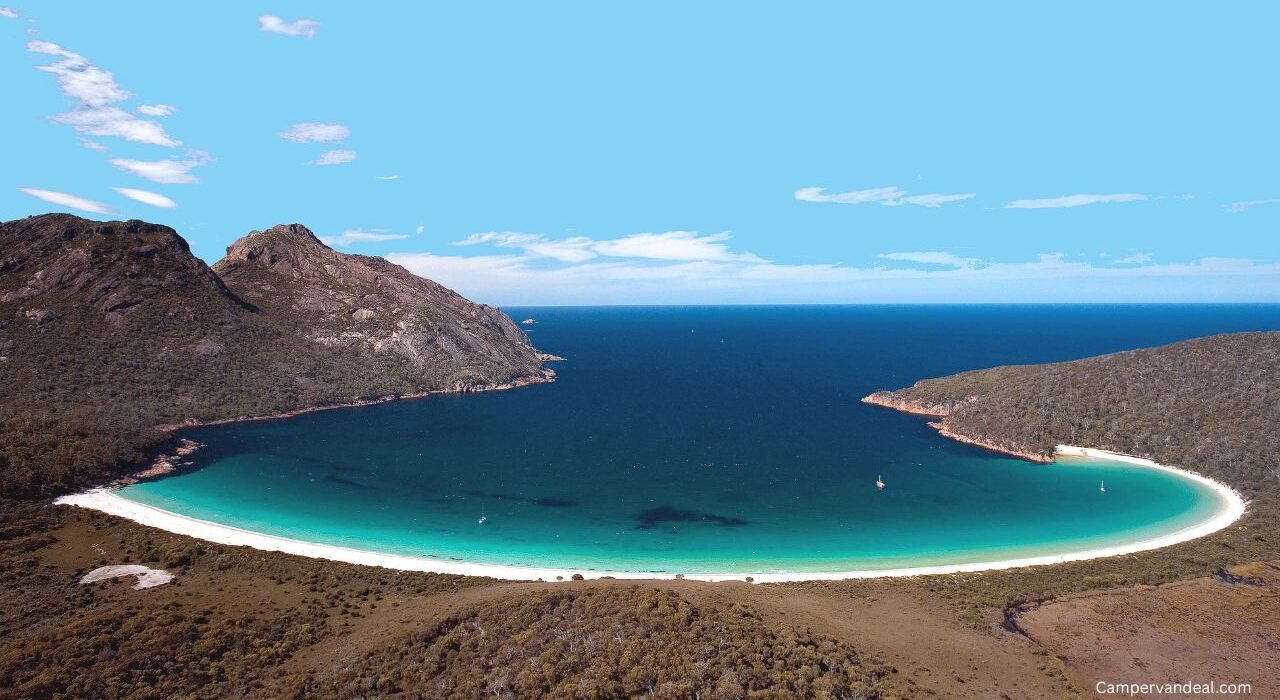
Walk to the Wineglass Bay Lookout in the cooler part of the day. The return lookout walk is steep in places and generally takes around 1.5 hours. Strong walkers can continue to Wineglass Bay or complete a longer circuit, but the lookout alone offers the classic view without using the whole day.
Spend the afternoon at Honeymoon Bay, Friendly Beaches or around Coles Bay. Check fire restrictions before cooking outdoors and keep wildlife away from food. Stay a second night so the day remains genuinely low-driving.
Day 8: Freycinet to the Tasman Peninsula
Approximate driving: 235 km / 3 hours 30 minutes.
This is the main relocation day. Follow the east coast south through Swansea and Orford, then continue toward Sorell and the Tasman Peninsula. Break the journey at a bakery, beach or coastal lookout, and avoid adding a major hike after the drive.
If you reach the peninsula early, stop at the Tessellated Pavement, Tasman Arch or Devil’s Kitchen. Stay near Port Arthur, Taranna or Nubeena. Booking ahead is sensible during summer weekends and school holidays.
Day 9: Port Arthur to Hobart
Approximate driving: 100 km / 1 hour 30 minutes, plus local stops.
Visit the Port Arthur Historic Site in the morning if your campervan return time allows. The site deserves at least two to three hours, so travellers with an early vehicle return should visit late on Day 8 instead.
Drive back to Hobart with a generous buffer. Before returning the campervan, refuel, empty wastewater and the toilet cassette at approved facilities, remove rubbish and pack your luggage. City traffic and the vehicle inspection can add time, especially if you have a flight later that day.
Campervan planning and campsites
Reserve key nights at Cradle Mountain and Freycinet well in advance for peak season. Holiday parks are the easiest choice for powered sites, showers, laundry and water. National park and council campgrounds may have fewer facilities and different booking rules.
Freedom camping is not permitted everywhere. Follow posted signs, local council rules and Tasmania Parks and Wildlife Service requirements. Only use sites where overnight camping is explicitly allowed, and never empty grey water or toilet waste outside an approved dump point.
Fuel, food and supplies
Hobart, Launceston, St Helens and Sorell are the most convenient places for major grocery shops. Top up fuel before entering remote areas rather than waiting for the tank to become low. Mobile coverage can be inconsistent around the Central Highlands, Cradle Mountain and parts of the northeast coast, so download offline maps.
Carry drinking water, a basic first-aid kit, warm clothing and a charged power bank. If the campervan uses LPG, confirm the bottle level and learn how to switch it safely during the handover.
Road and weather safety
Drive conservatively and allow faster vehicles to pass at safe pull-outs. Wildlife is most active around dawn, dusk and after dark, which increases collision risk. Plan to reach camp before sunset whenever possible.
Check Tasmania Police community alerts, current road conditions and Parks and Wildlife Service notices before major driving or walking days. Snow, strong wind, heavy rain and bushfire conditions can affect this route. If the weather closes a walk, use the itinerary’s two-night stays as flexibility rather than forcing the original plan.
Is nine days enough?
Nine days is enough for this circuit if you are comfortable with one long relocation day and do not add Tasmania’s far northwest or Bruny Island. If you have eleven or twelve days, add an extra night at Lake St Clair, the Bay of Fires or the Tasman Peninsula. If you have only seven days, remove either the Bay of Fires or the Tasman Peninsula instead of compressing every stop.
This route works because it balances the island’s major landscapes with practical service towns and two full no-driving days. Treat the distances as a framework, confirm conditions before departure and leave room for Tasmania’s weather to change the plan.
Last updated: August 18, 2026
Route Highlights
Cradle Mountain
Wineglass Bay lookout
Bay of Fires
Mount Field waterfalls
NatureHiking
Day-by-Day Itinerary
1
Day 1: Day 1: Cradle Mountain
Continue along the route, stopping at scenic lookouts and local towns for supplies and short walks.
2
Day 2: Day 2: Wineglass Bay lookout
Continue along the route, stopping at scenic lookouts and local towns for supplies and short walks.
3
Day 3: Day 3: Bay of Fires
Continue along the route, stopping at scenic lookouts and local towns for supplies and short walks.
4
Day 4: Day 4: Mount Field waterfalls
Continue along the route, stopping at scenic lookouts and local towns for supplies and short walks.
5
Day 5: Day 5: On the road
Continue along the route, stopping at scenic lookouts and local towns for supplies and short walks.