
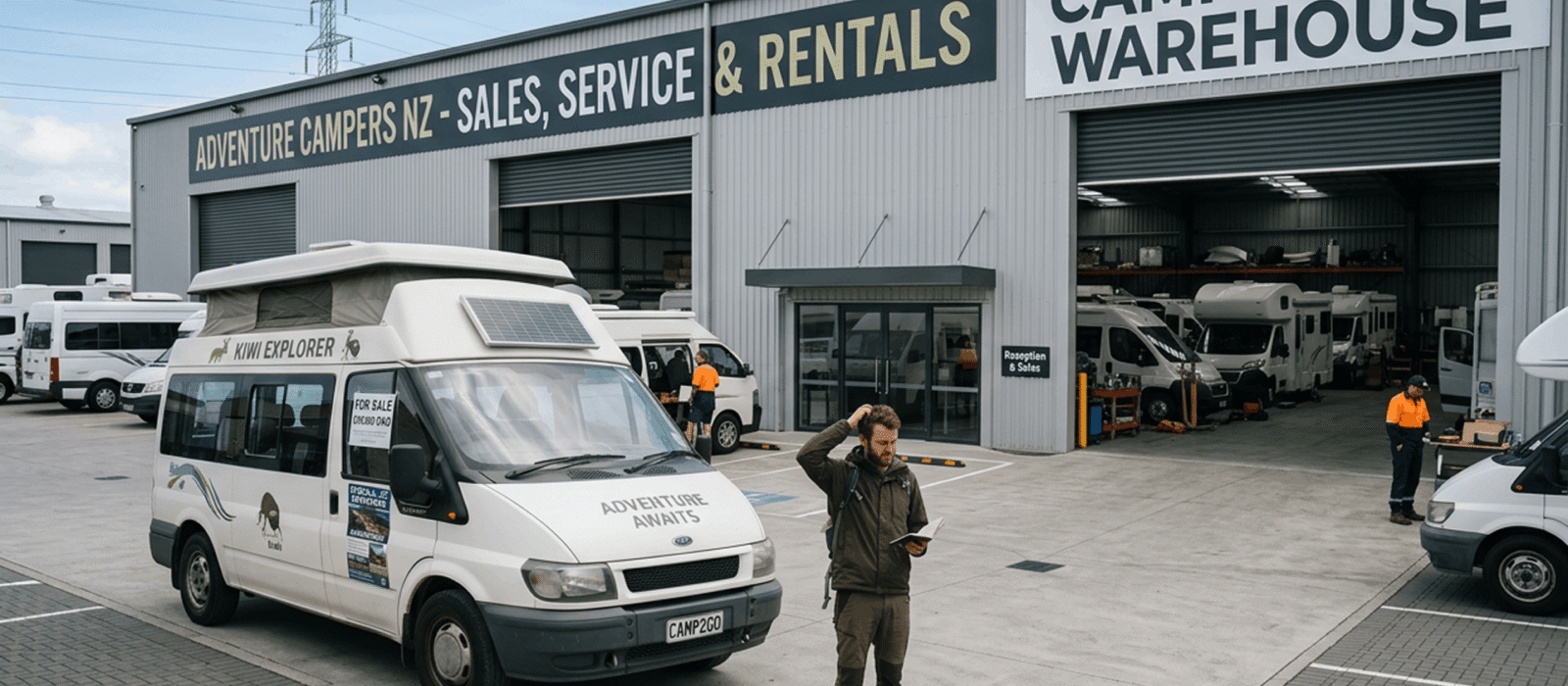
Every backpacker hostel noticeboard in Auckland has the same corkboard: a row of handwritten “Van for Sale — $4,500 ono” ads pinned next to job listings and surf lesson flyers. It’s not a coincidence. Buying and reselling your own van is one of the most established travel strategies in New Zealand, and it genuinely can be dramatically cheaper than renting.
But “cheaper” and “risk-free” aren’t the same thing.
Buying a van means you’re now responsible for a vehicle that could break down, fail a warrant check, or simply not sell when you need it to. Renting means someone else carries that risk — and you pay for the privilege.
Here’s the honest, numbers-based version of the decision, based on real 2026 backpacker vehicle listings and what it actually costs to own, run, and resell a van in New Zealand.
What backpacker vans actually cost to buy
Prices vary a lot depending on how basic or fitted-out the vehicle is.
| Vehicle type | Typical price (2026) |
|---|---|
| Basic older sedan/wagon, sleeping only | $1,500–$4,000 |
| Converted people-mover (Estima, Serena, Stepwagon) | $4,000–$10,000 |
| Self-contained Hiace-style campervan | $8,000–$16,000+ |
Buying through a dedicated backpacker dealer (a “buy-back” market) typically costs more than a private sale, but comes with a mechanical warranty, WOF, rego, and often a guaranteed resale price built in.
The running costs people forget to budget for
The purchase price is just the entry fee. Ongoing legal requirements apply the whole time you own the vehicle.
- WOF (Warrant of Fitness): roughly $50–$75 per inspection — every 6 months for pre-2000 vehicles, every 12 months for newer ones
- Rego (vehicle licensing): typically $9–$12 per month depending on vehicle class, payable in advance
- Basic third-party insurance: optional, but genuinely worth having — a few hundred dollars for the length of a trip
- RUC, if diesel: bought in 1,000km blocks, same system that applies to rental diesel vehicles
- A pre-purchase mechanical inspection: $100–$200, and one of the best investments you can make
⚠️ A WOF only checks basic roadworthiness — lights, tyres, brakes, seatbelts. It says nothing about engine or transmission health. Buying a van with a fresh WOF is reassuring, but it isn’t a substitute for an actual mechanical inspection.
The part everyone underestimates: reselling it
This is where the real financial risk of buying sits — not in the purchase, but in whether you can sell it again for a reasonable price, on your timeline, not the market’s.
and plan the sale around the same north-to-south seasonal travel pattern everyone else follows
That last point matters more than it sounds. Most travellers fly into Auckland, head south over summer, and try to sell in Christchurch at the end of their trip — at exactly the same time thousands of other backpackers are trying to do the same thing. Selling in the “wrong” city, in the “wrong” season, can mean a genuinely slow sale or a lowball price.
| Private resale (patient, good timing) Often recovers 60–80% of the purchase price |
Dealer buy-back guarantee Typically 30–50% of purchase price — less money, but certainty and no last-week stress |
A buy-back arrangement isn’t a bad option — it’s a genuine trade-off. You give up resale value in exchange for not spending your final week in the country fielding lowball offers in a hostel car park while trying to catch a flight.
A realistic total-cost example
Let’s run real numbers on a ten-week New Zealand trip for two people — a common backpacker timeframe.
| Cost item | Buying |
|---|---|
| Self-contained campervan (Hiace-style) | $9,000 |
| Pre-purchase inspection | $150 |
| WOF + rego for the trip (~10 weeks) | $120 |
| Basic insurance for the trip | $350 |
| Resale at end of trip (70% recovery, private sale) | –$6,300 |
| Net cost of ownership | ≈ $3,320 |
Compare that to renting an equivalent self-contained 2-berth campervan for the same 70 days, at a realistic blended rate across shoulder and peak pricing of roughly $110–$150/day: somewhere between $7,700 and $10,500, before fuel or campsites — both of which cost roughly the same either way.
On paper, buying can save several thousand dollars over a long trip. That gap is real. It’s also not guaranteed — it assumes no major mechanical failure, and a resale that goes roughly to plan.
Where the “it’s cheaper” math falls apart
The savings are genuine on average — but they’re an average, not a guarantee. Here’s what can eat into them fast.
- A major mechanical failure with no warranty and no roadside assistance included
- A failed WOF mid-trip requiring unexpected repairs before you can legally keep driving
- Being unable to sell before your flight, forcing a rushed, heavily discounted sale
- Buying from a private seller with hidden debt or ownership issues on the vehicle
- Time spent van-shopping and van-selling instead of actually travelling
- No self-containment certificate, limiting where you can legally freedom camp
⚠️ Before buying from a private seller, check the vehicle through NZTA-linked services like CarJam or MotorWeb for outstanding debt or a stolen/written-off history. It’s a small cost against the risk of buying someone else’s finance problem.
Rental isn’t just “more expensive” — it’s a different risk profile
This is the trade-off people often skip past. Renting costs more per day, but almost every risk above is someone else’s problem.
| Rent when: Your trip is under ~4 weeks, you want guaranteed roadside support, you don’t want to spend travel time buying or selling, or your dates are tight and inflexible |
Buy when: Your trip is 2+ months, you’re comfortable handling basic vehicle admin, and you have flexibility around your final week’s sale |
The break-even point, roughly, tends to land somewhere around five to eight weeks — shorter than that, rental’s simplicity is usually worth the premium; longer than that, ownership’s cost advantage tends to outweigh the added hassle for most travellers.
If you do decide to buy: the non-negotiables
- Get a pre-purchase mechanical inspection, not just a fresh WOF
- Check ownership history and outstanding debt through CarJam or MotorWeb
- Confirm the self-containment certificate is current, if you plan to freedom camp
- Match the WOF/rego expiry to at least the length of your trip
- Ask for service history, not just a verbal assurance
- Budget for the sale realistically — don’t assume you’ll get your full price back
The verdict
Buying a campervan in New Zealand isn’t a backpacker myth or an outdated hack — the maths genuinely works, especially for trips of two months or longer. But it works on average, not as a guarantee, and it trades a higher price tag for real personal risk.
| ✅ Buy if: your trip is long, you can handle basic vehicle admin, and you’re realistic about resale value. | ❌ Rent if: your trip is short, your dates are fixed, or a breakdown with no support would genuinely wreck your holiday. |
The vans on that hostel corkboard aren’t a gimmick — they’re the tail end of a system that works reasonably well, most of the time, for people with the time and patience to see it through properly.
Buy for the trip length. Rent for the peace of mind.
Sources & further reading
- The Roaming Renegades — Guide to Buying a Campervan in New Zealand 2026
- Adventure Sports Holidays — Guide to Buying a Campervan in Auckland
- Wandering Wheatleys — Tips for Buying a Campervan in New Zealand
- Backpacker Board — Campervans & Motorhomes for Sale (live listings)
- Nuventure Travels — Our Experience Buying & Selling a Campervan in NZ
Prices reflect real 2026 backpacker vehicle listings and published guides at time of writing. Actual purchase and resale prices vary significantly with vehicle condition, season, and location — treat these as realistic ranges, not guarantees.
Last updated: August 20, 2026